Flipping the Loyalty Ledger
What happens when a loyalty currency stops asking you to wait — and lets you take the reward first, then earn it back?
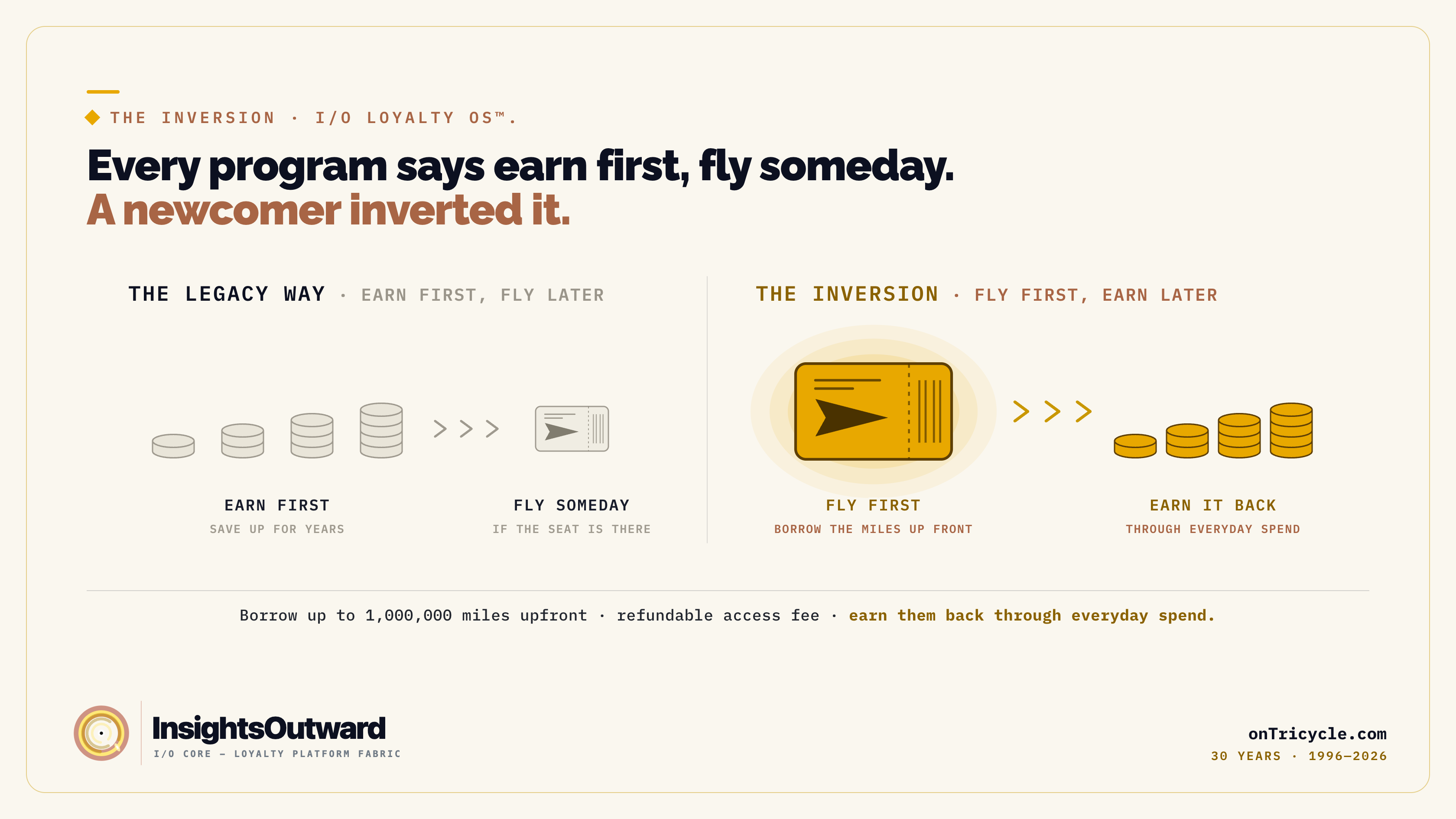
Fly first. Earn the miles back.
Every loyalty program ever built runs on the same promise: earn now, redeem someday. Spend, accumulate, wait. The reward sits out on the horizon — delayed gratification, incentivizing us along our journeys. It’s how loyalty has always worked — the tried-and-true approach, some might say.
Then a startup in Singapore turned it inside out.
HeyMax — built by ex-Meta engineers — runs a rewards platform where everyday spend earns non-expiring “Max Miles” that transfer 1:1 into 20-plus airline and hotel programs. Ok, fine. Plenty of companies aggregate miles. And then last month they launched something I haven’t seen anywhere in thirty years of doing this.
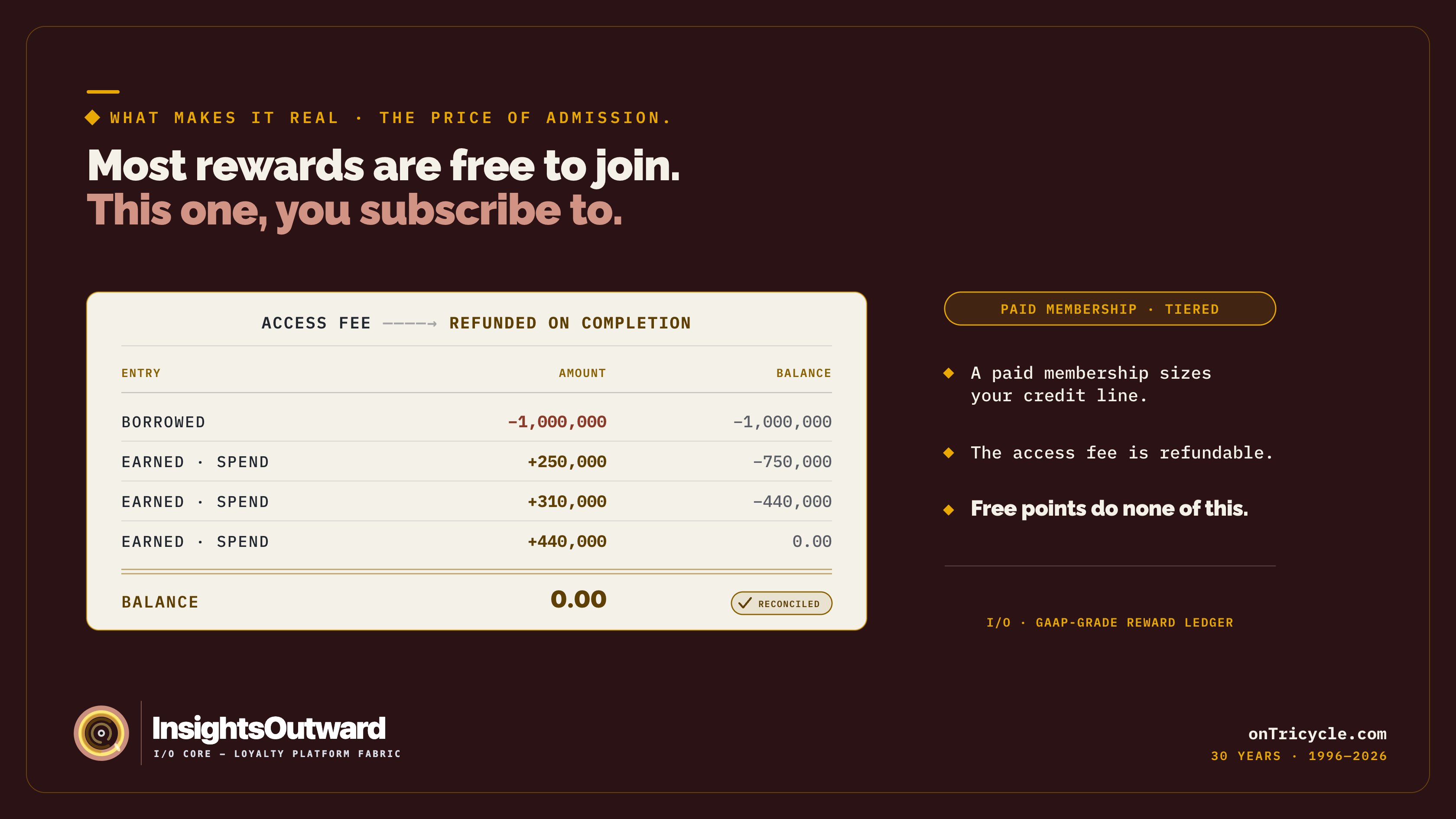
It’s called HeyMax First. You borrow the miles. Up to a million of them, upfront, before you’ve earned a single one. You pay a per-mile access fee — think of it as a refundable deposit on the float — book the business-class seat now, and earn the miles back over time through the spending you were already going to do. No deadline. No penalty. Once you’ve earned them back, the fee comes back in full. You flew first. You paid later. In miles.
There’s a subscription underneath it, too — paid membership tiers size how large a line you can draw. Two instruments in one: a membership that sizes the credit line, and a refundable fee that prices the borrow.
It breaks two rules of loyalty at once.
To me, this approach breaks two of the tried-and-true “Rules of Loyalty” at once.
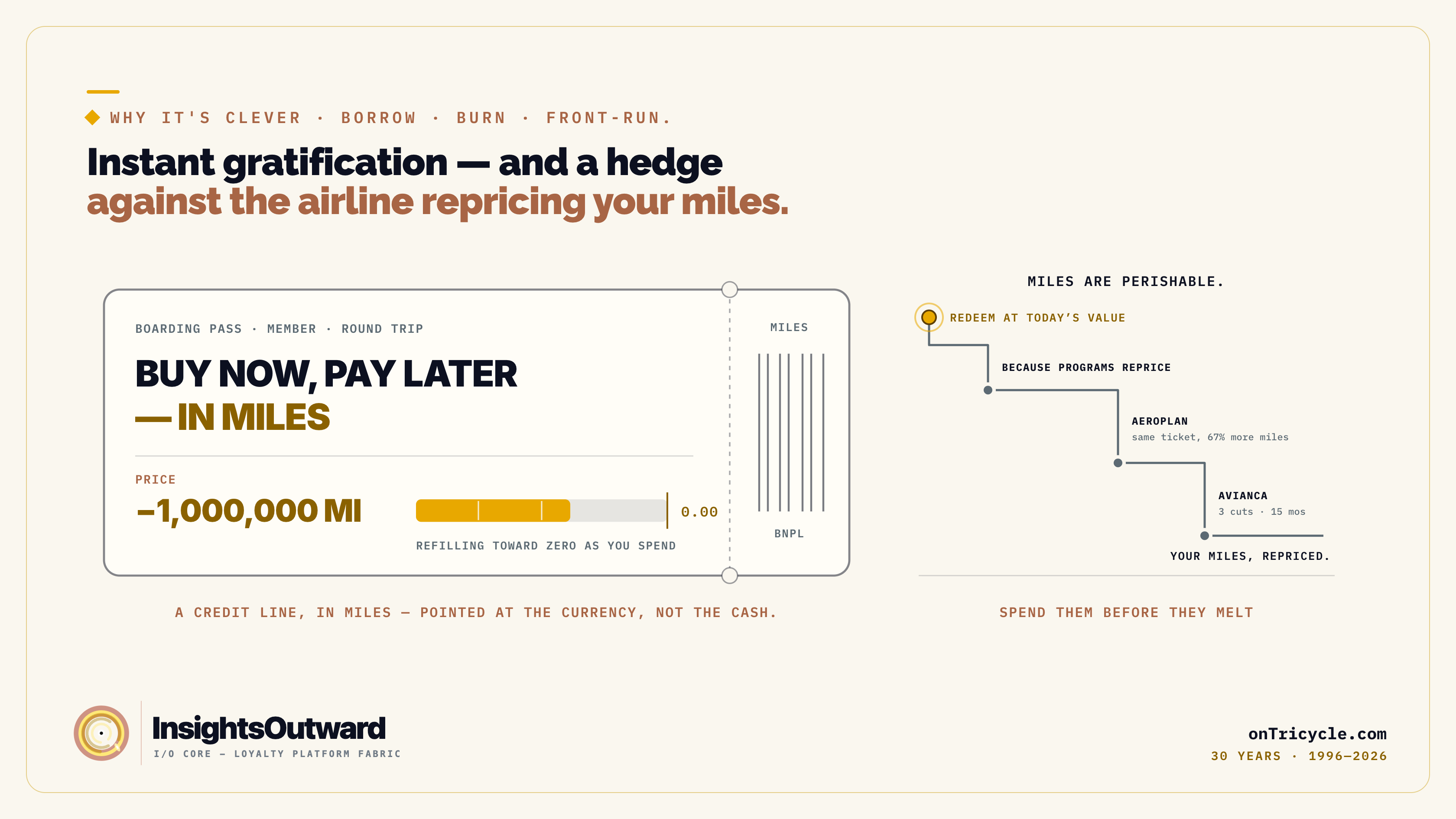
The first rule it breaks is delayed gratification. Loyalty has always asked you to wait. HeyMax lets you take the reward first and settle up after — which is buy-now-pay-later logic — HeyMax itself calls it a credit line — except it’s aimed at the currency instead of the cash. We’ve all seen “fly now, pay later” financing on the ticket price. Nobody had pointed it at the miles.
The second rule is subtler, and it’s the part I find clever. Loyalty currencies are perishable — they can lose value while you hold them. 2026 has been brutal on that front: Aeroplan raised some award prices 67% overnight; Avianca has devalued three times in fifteen months. If your miles are worth less every quarter, the rational move is to spend them before the airline reprices them. HeyMax turned that hedge into a product. Borrow, burn, front-run the devaluation. You’re not hoarding a melting asset — you’re spending it at today’s value and backfilling later.
The move isn’t really about travel.
This model may have some issues: it is public and unpatented — anyone with the infrastructure could copy it tomorrow. There’s regulatory exposure in Europe, where if borrowed miles get deemed a currency, selling them starts to look like a financial product. And then the obvious worry — people taking the trip and walking. The hedge against that use case is that the access fee is a forfeitable deposit, real skin in the game. But these concerns seem manageable...and it will be very interesting to see how this scales, who takes advantage of this approach. Simply put, will it work?
Which is what got me thinking about where else this innovative loyalty currency model belongs.
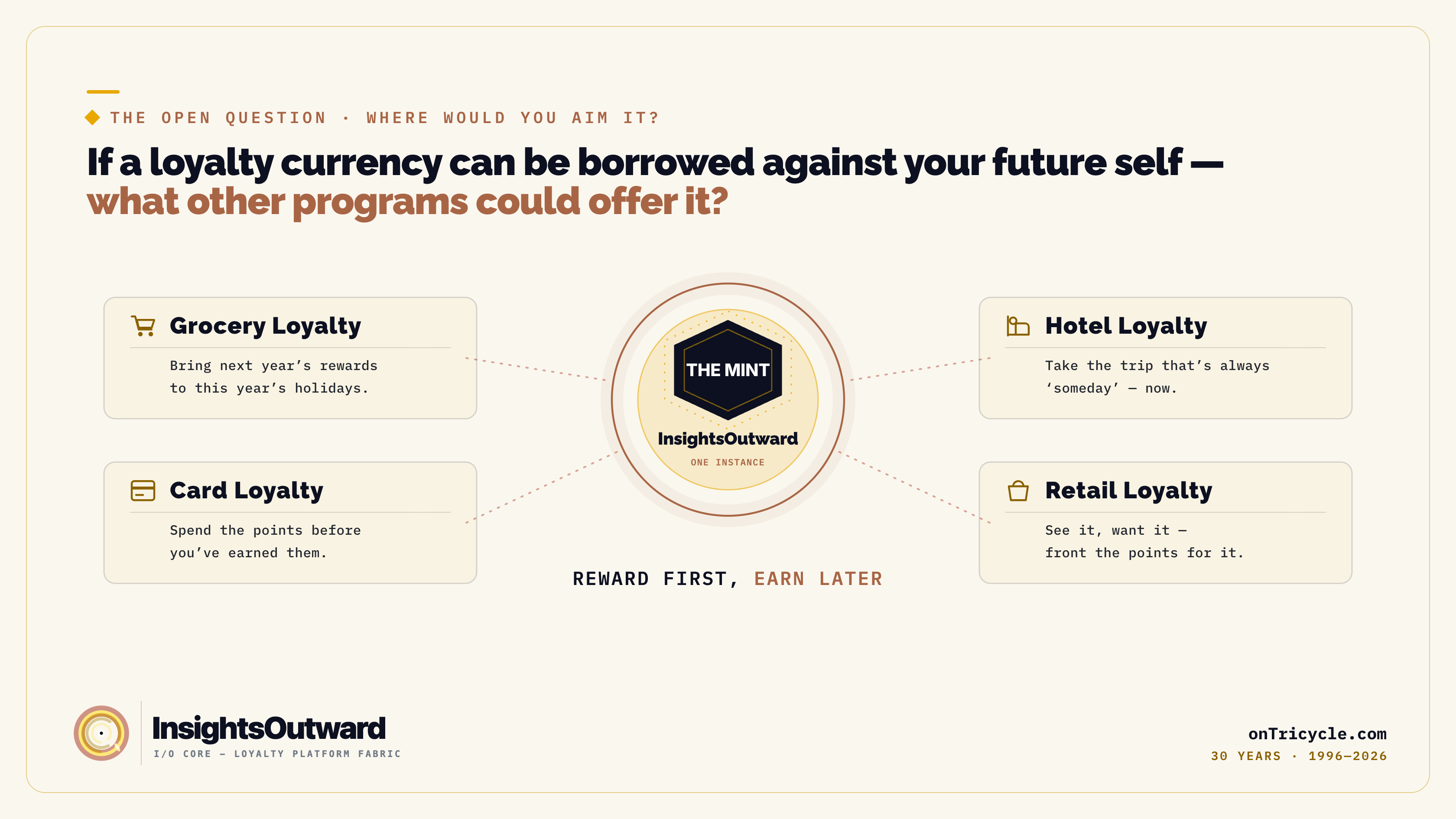
Because the borrow-and-earn move isn’t really about travel. It’s about any brand sitting on a pile of stockpiled, perishable, “someday currency” with a redemption problem. Think about the breakage every program quietly books as profit — all the points people accumulate and never spend. That breakage is a symptom of distance: the reward is too far away to feel real. Borrow-and-earn collapses the distance. It hands you the reward now and turns your ongoing spend into the repayment. Suddenly you’re not saving toward something abstract — you’re earning down something you already enjoyed.
A grocery chain could let a loyal shopper front a year of rewards before the holidays. A hotel brand could let you take the anniversary trip now and earn it back on the stays you’d book anyway. A card program, or a retail program, letting you front points against the next big thing — anywhere there’s a currency people bank and rarely burn, there could be a version of front it, don’t bank it.
This isn’t a promotion. It’s an accounting instrument.
What HeyMax built isn’t a marketing promotion — it’s an accounting instrument. A borrowed balance, drawn down and repaid, with a refundable fee that has to reconcile to the cent. The “currency” is carried on a ledger that holds the borrowed balance and earns it back cleanly, auditably, without becoming a liability no one can close the books on. The difference between a points gimmick and an actual currency is that verifiable ledger underneath — a ledger that can run in reverse: borrowed first, earned back.
In effect, HeyMax has become the central bank for its own currency — issuing it, lending it, pricing the float, running the tiers on top. That’s not a traditional rewards program; it’s a monetary system, privately run.
What else have we assumed a loyalty currency can’t do?
“Loyalty reimagined” gets said quite a bit, and shown almost never. This is an instance of what that looks like — not a new rewards mechanic, but a rethink of what the currency itself can do. In this case: that it can be fronted instead of banked.
And so, if a loyalty currency can be borrowed against your future self, what else can and should it do that we’ve all just assumed it can’t?
Build the Currency on a Ledger You Own.
The mechanic can change. The requirement underneath it cannot: one verifiable system for issuing, tracking, reconciling, and governing the currency.
Bring Us the Model
See how InsightsOutward can support a loyalty currency that goes beyond earn-and-burn.
Request a Demo by Email